


Blog
The Treatments Exist. The Delivery System Doesn't.
The Treatments Exist. The Delivery System Doesn't.
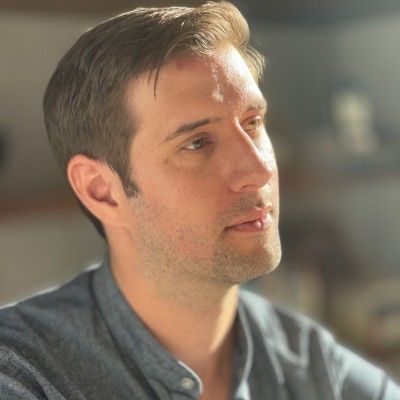
Bryson Tombridge
Co-founder and CEO of Tono
Everyone agrees there's a dermatology access crisis in America.
135 million patients struggle to access care. Wait times for a specialist exceed 60 days in most markets. Sixty percent of U.S. counties have zero dermatologists. For patients with complex conditions, hidradenitis suppurativa, psoriasis requiring biologic therapy, immune-related skin toxicities from cancer treatment, the wait can stretch into months, if access exists at all.
The consensus explanation is that this is a scheduling problem. Not enough appointment slots. Too much demand. The proposed solutions follow: build a marketplace, add more hours, put a provider on a screen.
That diagnosis is wrong. And the solutions that follow from it are making things worse.
The real problem is supply
The dermatology access crisis is not a scheduling problem. It is a supply problem.
There are roughly 12,000 dermatologists serving 330 million Americans. Residency programs produce about 550 graduates per year, a number that hasn't meaningfully changed in two decades. Thirty percent of practicing dermatologists are over 55. You cannot train your way out of this shortage. The math doesn't work. The only option is to multiply the capacity of the physicians who already exist.
The problem sharpens at the subspecialty level. Of those 550 annual graduates, only a fraction pursue fellowship training in areas like hidradenitis suppurativa, pediatric dermatology, supportive oncodermatology, dermatopathology, or complex inflammatory disease. These are the physicians who manage some of the hardest cases in medicine, publish the research that advances the field, and define the standard of care. For the growing number of patients who need them, the system offers no mechanism to connect their expertise to need at national scale.
This distinction matters enormously. If you misdiagnose the problem as scheduling, you build a marketplace, and marketplaces optimize for speed and availability, not clinical depth. You connect patients with complex conditions to whoever is available next, not whoever is most qualified. The patient gets seen faster. They don't necessarily get seen better.
Speed is not the bottleneck. Specialty clinical judgment is.
The science outran the infrastructure
The irony of where dermatology stands today is that the clinical science has never been more powerful, and the delivery infrastructure has never been more inadequate.
The field has undergone a therapeutic revolution. Fifteen or more new biologics have been approved since 2020 for HS, psoriasis, and atopic dermatitis alone. Dupixent reshaped atopic dermatitis. IL-17 and IL-23 inhibitors brought unprecedented clearance rates to psoriasis. JAK inhibitors opened new doors for alopecia areata and vitiligo. Biologic-class therapies are finally reaching hidradenitis suppurativa, one of the most debilitating and underdiagnosed conditions in all of medicine.
Meanwhile, the expansion of immunotherapy across oncology has created an entirely new category of dermatologic need. Checkpoint inhibitors are now standard of care for fifteen or more cancer types. Forty to seventy percent of patients on these therapies develop skin toxicities, conditions that require specialty dermatologic expertise to manage, and that most cancer centers are not equipped to treat. Supportive oncodermatology barely existed five years ago. Today it's an urgent, underserved clinical discipline.
These therapies represent some of the most important advances in modern medicine. But they demand specialty-level clinical judgment to prescribe, manage, and monitor, and the system that's supposed to connect patients to that expertise was built for a simpler era.
The science outran the infrastructure. The treatments exist. The delivery system to get them to patients does not.
What hasn't worked
The industry has taken three swings at dermatology access. All three missed.
The first was direct-to-consumer telepharmacy, asynchronous platforms for tretinoin, acne treatments, and basic skincare. Companies like Hims and Ro built real businesses by making simple prescriptions frictionless. But these platforms were never designed for clinical complexity. They serve the healthiest patients with the most straightforward needs. For anyone living with a chronic or complex skin condition, the experience begins and ends with a prescription pad, not a clinical relationship.
The second was convenience telehealth, getting a patient in front of a provider quickly for rashes, routine concerns, and low-acuity visits. This addressed a broader set of use cases but still left the hardest ones untouched. Patients with HS, connective tissue disease, or immune-related skin toxicities from cancer therapy were never going to be served by a ten-minute asynchronous visit.
The third wave went furthest in the wrong direction. White-label telehealth platforms commoditized the physician entirely, reducing clinical judgment to a bottleneck to be engineered around rather than a capability to be amplified. The doctor became interchangeable. The model optimized for throughput at the expense of expertise, and unfortunately we are now seeing the consequences of that approach.
None of these generations solved the underlying problem because none correctly identified it. Convenience doesn't fix a supply shortage. Speed doesn't substitute for clinical depth. And a platform that treats dermatologists as interchangeable inputs will never deliver the kind of care that complex conditions demand.
What the field actually needs
Solving the specialty supply problem requires three things working together. None works alone.
Physicians first. The foundation has to be board-certified dermatologists, not mid-levels, not generalists, not interchangeable providers. For subspecialty conditions, it has to be fellowship-trained physicians who treat the cases other providers refer out. The clinical network is not a feature of the solution. It is the solution.
Purpose-built technology. The technology has to be designed around how specialty dermatology actually works, not adapted from a general telehealth framework or a legacy EHR. AI-native clinical infrastructure that orchestrates the entire care journey: intelligent routing that matches patient acuity to the right specialist, clinical decision support during the encounter, care coordination and prior authorization automation after it, chronic disease monitoring between visits. End-to-end. Built to amplify what dermatologists can do, not to replace them.
Enterprise distribution. The best physicians and the best technology still can't reach patients stuck in broken referral chains. The delivery mechanism has to be partnerships with health systems, cancer centers, and primary care networks, embedding specialty dermatology into the care pathways where patients already are. A cancer center that can't staff oncodermatology shouldn't have to build a department. A health system that can't recruit subspecialists to cover a region shouldn't have to leave patients without access.
When these three elements work together, they compound. The physicians attract institutional partners. The technology extends physician reach across state lines. The partnerships create patient volume that draws more specialists into the network. The system gets better as it grows, not just bigger.
Why now is the time
Several structural forces have converged to make this solvable for the first time.
Regulatory changes, including permanent telehealth reimbursement parity from CMS, have made a national specialty platform viable in ways that weren't possible even five years ago. The biologic therapy pipeline continues to accelerate, creating more patients who need specialty-level management. Immunotherapy expansion is generating dermatologic demand that most institutions can't meet. And AI has matured to the point where it can meaningfully amplify physician capacity, not as a buzzword, but as genuine clinical infrastructure.
The specialty supply gap is widening. The complexity of conditions is increasing. And the tools to bridge that gap finally exist.
Dermatology is the specialty most suited for this transformation, the most visual, the most technology-ready, the most clearly underserved relative to the sophistication of its clinical science. The field has earned a delivery system worthy of what its physicians have built.
The question is no longer whether that system will exist. It's who will build it.
— Bryson Tombridge Co-Founder & CEO, Tono Health
Bryson Tombridge
Co-founder and CEO of Tono
About the author
Bryson Tombridge is Co-Founder and CEO of Tono Health, the AI-native platform building the infrastructure for specialty dermatology in the United States. He began his career at J.P. Morgan and founded New Atlas Partners, advising founders, venture firms, and sovereign wealth funds on more than $1 billion in transactions. He started Tono to solve one problem: connecting the best dermatologists in the country to every patient who needs them.